What is a tertiary crusher, and why does it show up last in a quarry upgrade?
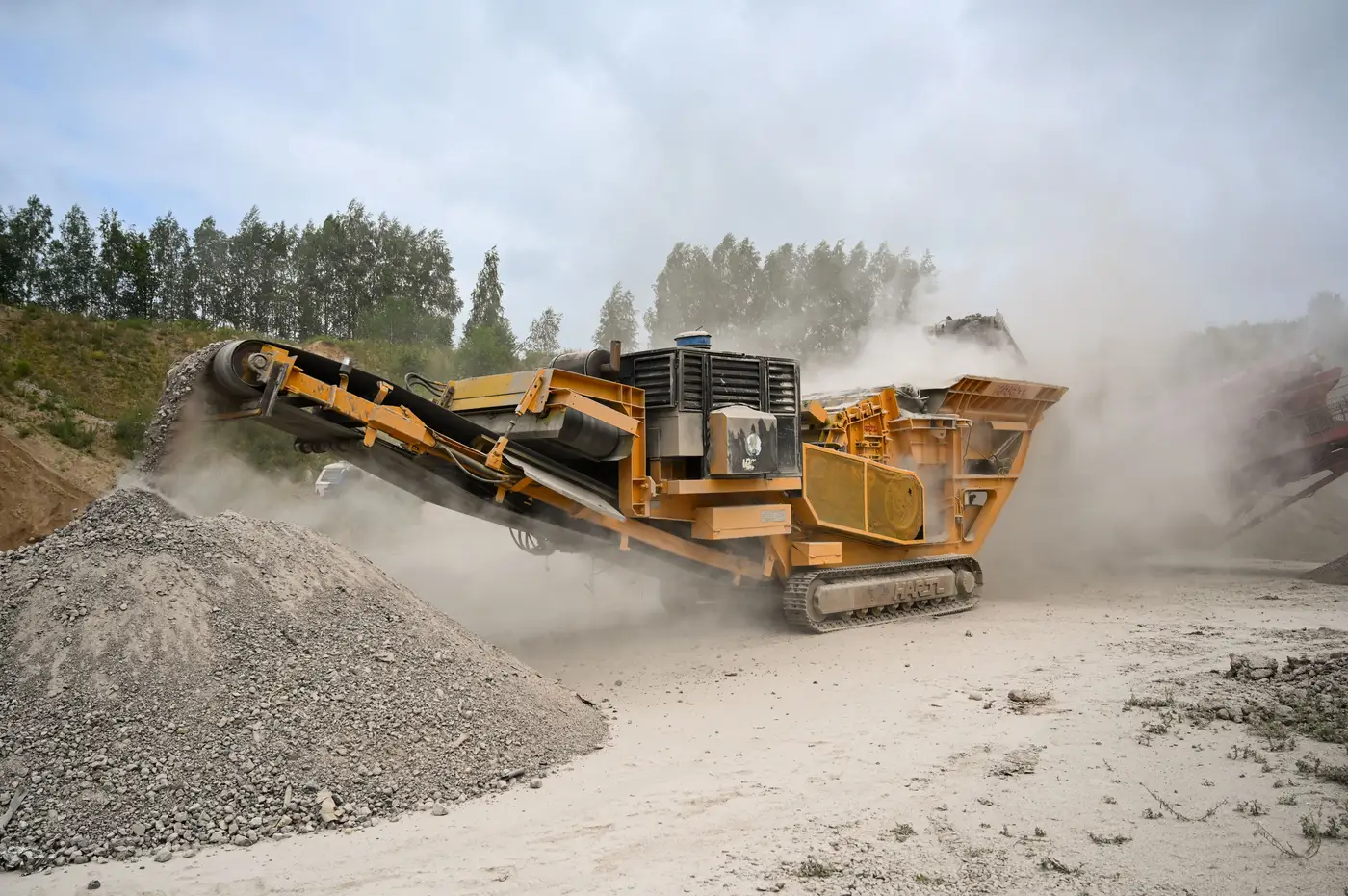
A tertiary crusher is the last stage of reduction before material goes to screening and stockpile. It takes the product off a secondary crusher, usually a cone running in closed circuit, and knocks it down to the finished sizes a producer actually sells: chip, minus, road base, whatever the spec sheet in the scale house calls for. If a pit only runs two stages, there's no tertiary at all. The product coming off the secondary just gets screened and shipped.
That distinction matters more than it sounds like it should, because a lot of market sizing work treats "the crushing circuit" as one line item. It isn't. Primary, secondary, and tertiary are three separate purchase decisions, bought on different timelines, for different reasons, and an analyst who collapses them into one number misses where the replacement cycle sits.
The three stages, and what breaks first
A primary crusher, jaw or gyratory, takes blasted rock straight off the face. It runs hot, it runs dirty, and it eats liners and wear plates on a schedule that's hard to dodge. Secondary crushers, usually cone, take the primary's output down further. Tertiary crushers, often a smaller cone or a VSI, do the fine reduction that produces sellable spec material.
Wear and tear scales with how much material passes through and how abrasive it is at that stage. Primary crushers see the biggest rocks and the roughest edges, so they tend to need rebuild or replacement first. Tertiary units process already-reduced, uniform feed. They still wear. Tertiary units typically need a liner change or a bearing job rather than a full rebuild.
Why tertiary sits last in the upgrade order
A producer planning a circuit upgrade doesn't start at the end. Capital goes to whatever's constraining throughput, and that's almost always upstream. A primary crusher that can't keep pace chokes the whole plant. A secondary that's undersized backs up stockpiles and forces a producer to run a smaller top-size feed than the pit can supply. Fix those first, and tertiary often just inherits more volume without needing a swap.
There's also a spec-driven reason. Tertiary crushers and the screens behind them get sized to a specific product mix. A producer running mostly base and fill doesn't need much tertiary capacity at all. One that's chasing manufactured sand or tighter-graded chip for concrete and asphalt work will invest in tertiary circuit upgrades, sometimes adding a dedicated VSI, specifically to hit that gradation. So tertiary replacement tends to track a producer's product mix decision more than straight wear, and it shows up on-site after the primary and secondary have already been dealt with, sometimes a full budget cycle later.
That lag is the part worth tracking if the job is sizing demand. A pit that just swapped its primary jaw for a new gyratory and left an old tertiary cone running past its usual service life isn't necessarily sitting on dead equipment. It may be a producer that's one capital cycle away from a tertiary order, once the upstream investment pays down and the product mix shift gets greenlit.
Reading the order, not just the count
This is where a quarterly pass across a region's pits earns its keep over a one-time inventory. A single count tells an analyst what's standing today. Two counts, dated and compared, show which stage moved first at each site, how long a tertiary unit sat unreplaced after the primary and secondary got refreshed, and whether that lag is typical for the region or a signal that a specific operator is behind schedule. Quarry Equipment Census tracks crusher, screen, loader, and hauler counts at that cadence, so the upgrade order shows up in the data instead of getting guessed at.
If you're trying to time a tertiary push across a region's pits instead of waiting for one call to come in, that's the read worth having on hand.