Count the iron at the pits you cover, then count it again next quarter.
Quarry Equipment Census counts crushers, screens, loaders and haulers at aggregate operations on a quarterly pass and sets each count against visible extraction. It is an early pilot, and we are taking names.
- GSD
- ≤0.5 m (VHR)
- Spectral
- RGB
- Cadence
- Quarterly
- Platform
- Satellite or aerial
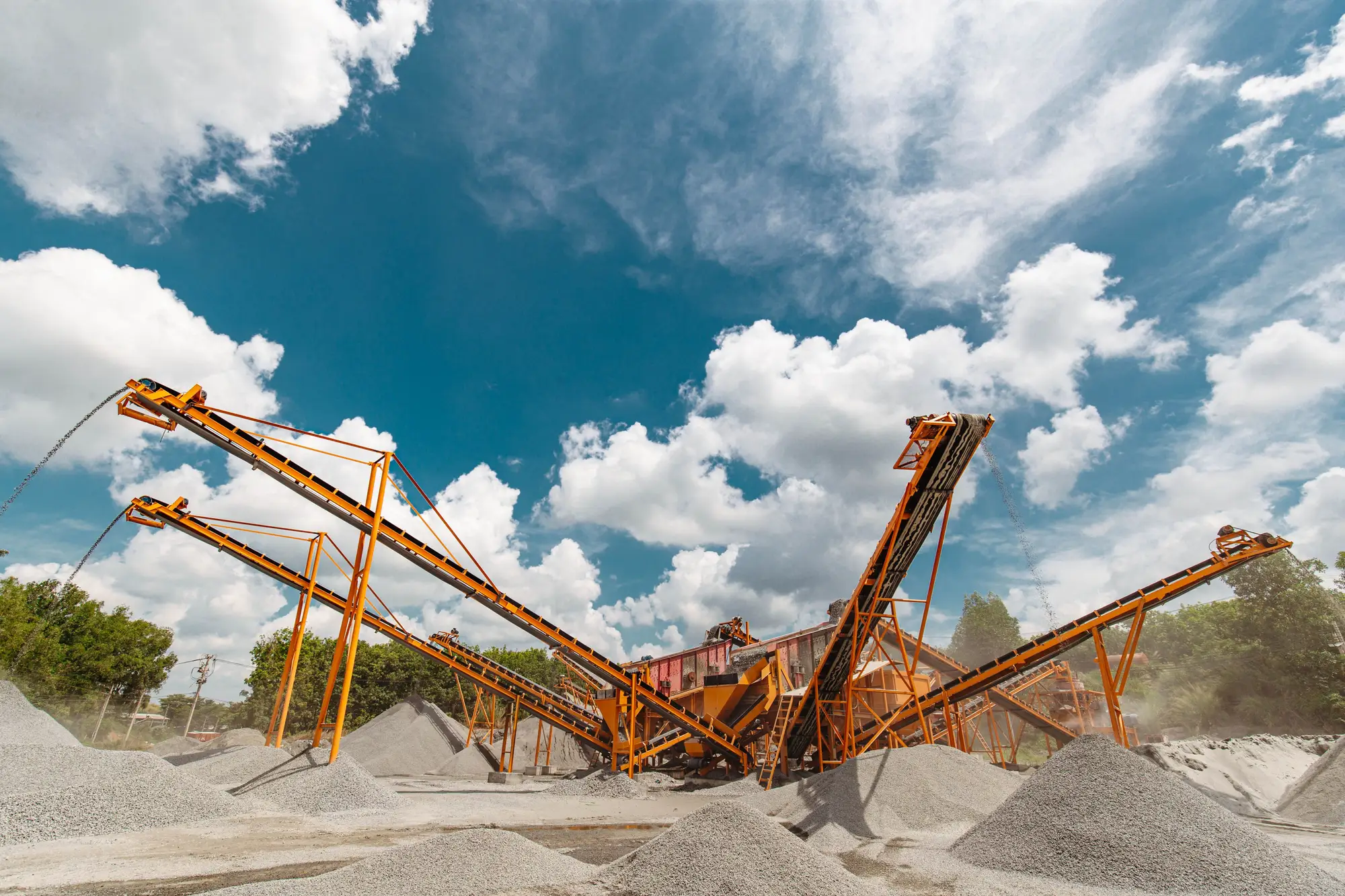
Where the windshield tour runs out
You own the replacement forecast for a territory of pits. To know what is standing in one, you drive past it, or you ask the dealer who sold the last machine. The tour happens when somebody has a free week, the notes go into a spreadsheet, and the account team keeps its own version from its last call.
From the road you can't tell whether a second screen went in behind the berm, or whether a crusher has sat through a full season without moving. By the time the forecast is due, a good part of the list is out of date.
The territory forecast, step by step
Choosing which pits to see
The windshield tour
You go where the account team has a relationship, or where the road is convenient. The rest of the territory stays a guess.
With Quarry Equipment Census
In the pilot, every pit in the region you name is on the same quarterly list, so the ones that changed stand out before anyone gets in a truck.
Counting the plant
The windshield tour
You count what you can see from the gate or the public road, and write it down as you go.
With Quarry Equipment Census
Each pit gets a count of crushers, screens, loaders and haulers from a dated overhead pass, in classes, on the same footing across the territory.
Seeing what changed
The windshield tour
You compare your notes against last year's notes, if you made any, and against what the rep remembers.
With Quarry Equipment Census
The same pit on two dated passes, side by side, shows what moved, what is new and what has been idle.
Telling working iron from parked iron
The windshield tour
A machine parked in the same spot looks the same on any visit. You find out it was idle when someone tells you.
With Quarry Equipment Census
A machine that sits in the same place across passes is flagged as idle, so a pit with a long-parked crusher is easy to find.
Reading it against extraction
The windshield tour
Activity at a pit is a feeling. Nobody on your team puts a fresh face or a growing stockpile next to the plant count.
With Quarry Equipment Census
The equipment count is set against visible change at the face and stockpiles, so you can tell a pit that is adding plant and digging more from one that is neither.
The forecast and the call
The windshield tour
You turn the list into a replacement forecast and brief the account team.
With Quarry Equipment Census
You do the same, from a list that is refreshed each quarter.
Still yours
The replacement forecast, the territory plan, and every conversation with the operator.
What the pilot hands you
Equipment census
Table per pit
One row per pit, with counts of crushers, screens, loaders and haulers on the dated pass. It answers the windshield tour's question, what is standing there, for every pit in your region at once. Lands in your spreadsheet or BI tool next to your installed-base records.
Ledger row: Counting the plantChange pair
Two dated images
The pit on this quarter's pass and last quarter's, side by side, with the detected equipment marked on each. It answers what moved and what is new, and it is the page you show an account manager before the call.
Ledger row: Seeing what changedExtraction-linked read
Change note per pit
A short read of visible change at the face and stockpiles between the two passes, set beside the equipment count. It is a pointer to which pits are working harder, never a production figure.
Ledger row: Reading it against extraction
How it works
Name the region
Send the pits, or the counties or polygon you cover. We list the pits inside it and agree the list with you before anything is counted.
Pick the pass
We pull the latest usable quarterly pass of each pit. A pass spoiled by cloud or dust gets skipped for the next clear one, which can push that pit's date.
Count and compare
Equipment is detected and sorted into classes, then compared with the prior dated pass of the same pit. The first quarter has no pair, because there is nothing earlier to set it against.
Hand-over, ahead of your forecast round
The census, the change pairs and the extraction read come back together, timed so they are in hand before your territory calls. Each later quarter adds a new pass to the same list.
Limits
- The tour sees what imagery can't
- An overhead pass cannot see under an overhang or a roof, inside a shed or behind a high stockpile. Those machines go uncounted, and you will find them on a visit.
- Classes, not brands
- The count is by class. It will not tell you whose crusher it is, what model, or how old. Brand share still comes from your dealers.
- Fixed plant counts as plant
- A crushing tower or fixed screening plant is one structure from above. Mobile units count as units. Separate decks inside a fixed plant do not.
- 0.5 m is the floor
- At that resolution a loader or hauler is a small shape, enough to detect and sort by class. Attachments, cab details and small support vehicles will not show.
- A quarterly pass is a snapshot
- It shows where machines stood on the day of the pass. A machine that came and went between two passes will not appear.
- Dust and cloud
- Dust over the haul roads, cloud and rain can spoil a pass. A pit can miss a quarter, and the date of each pass is on the page.
- No tonnage
- Visible extraction activity is what the imagery shows. It is not certified tonnage, production volume or an extraction rate.
Who it's for
Switch if
- You are a market intelligence or territory analyst at an equipment OEM, sizing replacement demand across a region of pits.
- Your installed-base list is a spreadsheet of dealer records and field notes that goes stale between visits.
- You want a standing quarterly list to prioritise account calls, and you can live with classes instead of makes.
Stick with the windshield tour if
- You need to know the make, model, age or hours of a specific machine.
- You need certified tonnage or production volume for an operator.
- You are auditing one site in detail. A site visit does that better.
Questions before you join
Can you tell which pits produce the most tonnage?
No. We read equipment and visible extraction activity from imagery. It is a pointer to which pits are working, not a production figure.
Do you identify machine brands?
No. The count is by class: crusher, screen, loader, hauler.
What happens on a rainy or dusty pass?
A spoiled pass can be skipped for the next usable one, which may push the date for that pit. The date of every pass is shown.
Can I see history from before I joined?
Only from the first pass we make of a pit, unless archive imagery of it is separately available. The first quarter shows a count with no change pair.
Is this a substitute for a site audit?
No. It is a signal for deciding which pits to look at first.
How do we check it against what we know?
Pick pits where your dealers already know what is standing, and compare the census to their list. Tell us which pits and we will set the two side by side.
Will it fit the installed-base records we already keep?
The census comes as a table and a map layer you can load next to your own records. We do not write into your CRM.
Who owns the imagery and the counts?
Ownership and use terms are written into the agreement before the pilot starts. The satellite and aerial sources keep their own licences.
How is the pilot priced?
Each pilot is scoped on its own. You get a written scope to take through your own approval.
See the row before the call.
Tell us the region and we will say what a first quarterly pass could count.