What counts as a crushing stage vs. a separate unit in a quarry count
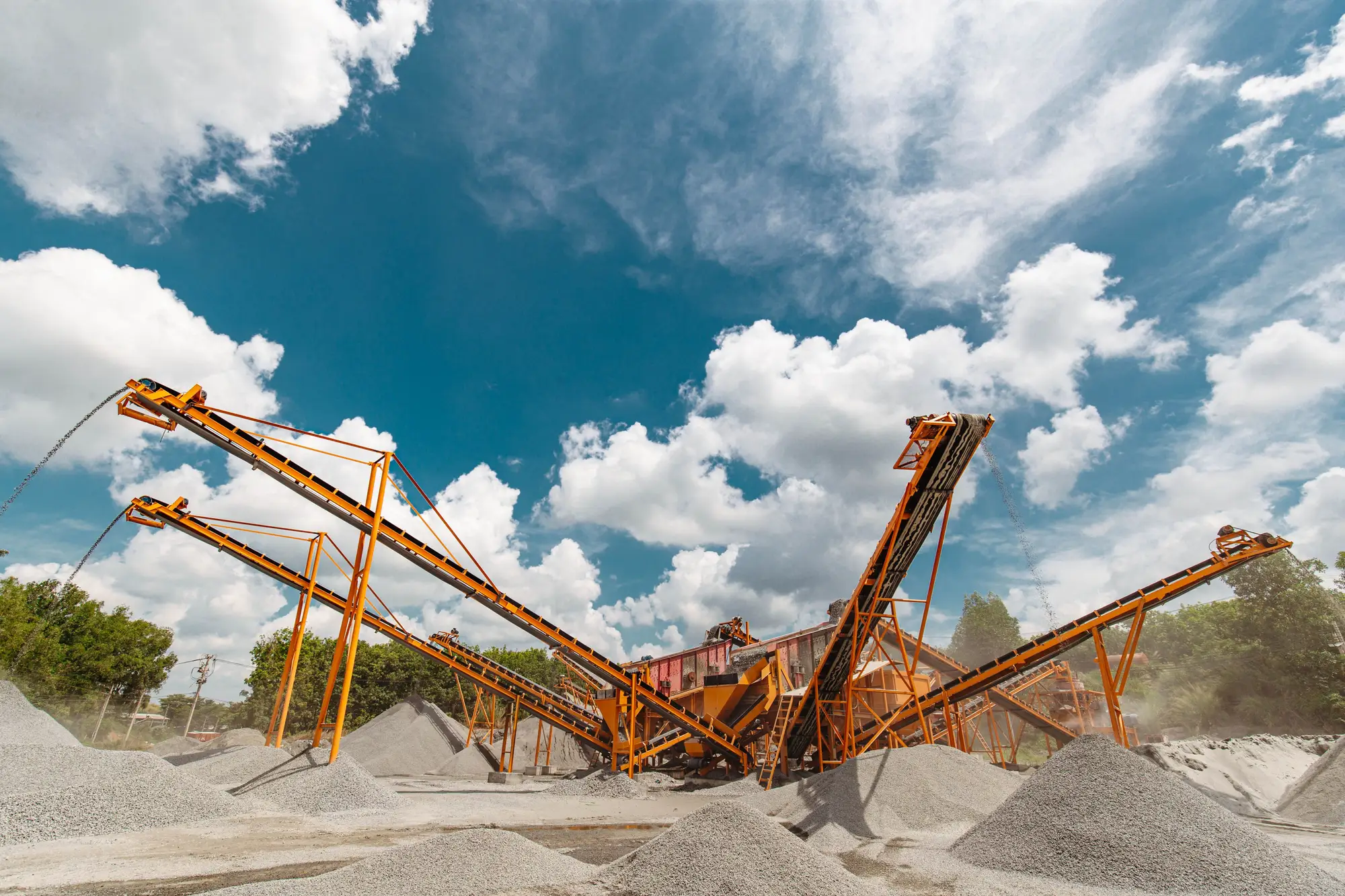
Two analysts can walk the same aerial pass of the same pit and come back with different crusher counts. One says four units, the other says six. Neither is wrong, exactly. They're just drawing the line between a "stage" and a "unit" in different places, and that line is the whole ballgame when you're trying to size replacement demand across a region.
A stage is a job, a unit is a machine
A crushing stage is defined by what the rock needs done to it next, not by how many machines happen to be doing it. Primary crushing takes run-of-mine feed down to something a conveyor can handle, usually a jaw or a gyratory sitting right off the pit face or the ROM stockpile. Secondary knocks that material down further, typically a cone. Tertiary shapes and sizes it for spec, often another cone or a vertical shaft impactor running in closed circuit with a screen.
That's three stages. It is not automatically three machines, and it is almost never three machines at a plant running two parallel lines. A mid-size quarry with two production trains might have two jaws, two secondary cones and two tertiary cones standing on the pad. That's six physical units serving three stages, twice over. Count the stages and you undercount the fleet. Count the units and you get the number that matters to an OEM: how many machines are standing in that plant, how old they look, and how many of them are due.
Where people actually get this wrong
The mistake usually isn't primary versus secondary. Those are easy to tell apart from height and feed arrangement alone, a gyratory sunk into a concrete pit looks nothing like a cone perched on a skid. The mistake is scalping screens and recirculating cones getting folded into "the crushing circuit" as if they were part of one asset, when each is a separate piece of standing equipment with its own wear life, its own replacement cycle, and its own line item on somebody's capex sheet.
A closed secondary-tertiary loop, where oversize off the product screen kicks back to the tertiary cone, reads on imagery as one tangled cluster of steel. It's tempting to call it "one crushing stage" and move on. But that screen is a unit. That cone is a unit. If one gets swapped out and the other doesn't, a count that treats them as a single blob never catches the change. The whole point of running two dated passes side by side is to see that kind of partial turnover, a new cone next to the same old screen, and a count that lumps equipment by circuit function rather than by physical machine throws that signal away before it ever gets compared.
Open-circuit tertiary crushers (no recirculating screen, product goes straight to stockpile) are simpler to place but get missed for a different reason: they're smaller, often unguarded on imagery by a structure, and easy to mistake for a feeder or a transfer conveyor. Mobile crushers add their own wrinkle. A tracked jaw or cone parked seasonally at a satellite pit is a unit if it's standing equipment on the day of the pass, whether or not it's bolted down.
The rule that holds up across plant layouts: count physical crushers as units, note which stage each one occupies, and don't merge machines just because they share a circuit. That gives you both the stage breakdown (how the plant is configured) and the raw asset count (what's standing there to wear out and get replaced), and you need both to read demand correctly. A plant adding a second tertiary cone to the same stage is a different signal than a plant swapping one cone for a bigger one, and a count that only tracks stages can't tell those two stories apart.
This is the same discipline Quarry Equipment Census applies across a region's pits every quarter: standing equipment counted machine by machine, with the stage noted but never used to collapse the count, so a change in one unit shows up against the last pass instead of disappearing into a circuit total.
If sorting stages from standalone units is already eating into the time you've got for sizing a region, that's exactly the gap this census is built to close.