Rebuild vs. replace: what actually pushes a quarry to buy a new crusher
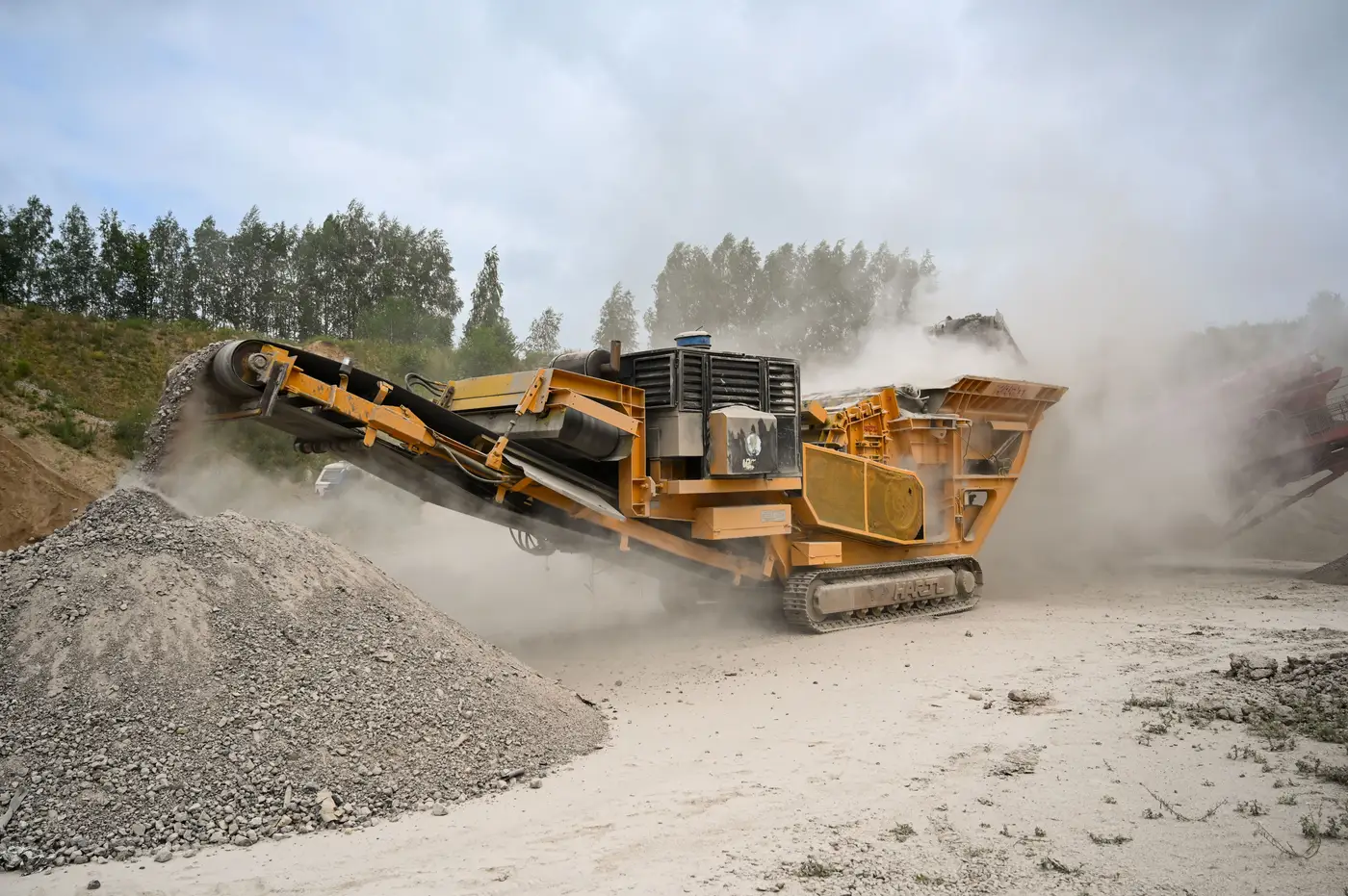
A plant manager doesn't wake up one morning and decide to drop capex on a new primary. The decision gets forced, usually by a combination of a failed component, a production target the current machine can't hit, and a maintenance budget that's started bleeding into next year's numbers. For anyone trying to size replacement demand across a region's pits, knowing where that line sits, and what pushes a pit past it, is the whole game. The plant's internal math is invisible from outside. The pattern it produces across a region isn't.
Why rebuilds are the default, not the exception
Jaw crushers and cone crushers are built to be rebuilt. A mainframe can run twenty-five years or more if the shaft, bearings, and structural welds hold up. Most of what fails on a routine basis is wear metal: jaw plates, mantle and concave, liners, toggle plates. None of that requires a new machine. A plant swaps wear parts on a schedule tied to tonnage and material abrasiveness, and a mid-life rebuild (new eccentric assembly, bearings, main shaft) resets the clock for a fraction of a new unit's price.
That's the economic logic operators lean on by default. A rebuild kit for a cone crusher main assembly typically runs a smaller slice of replacement cost, and a shop can usually turn it in a scheduled outage window rather than the months it takes to get a new crusher fabricated, shipped, and commissioned. If the frame is sound and the OEM still stocks parts, rebuilding is the lower-risk, lower-capital path almost every time. This is why aggregate fleets skew old. A crusher purchased in the 1990s is still a normal sight on a working pit floor.
What flips the decision to new iron
The rebuild math stops working at a few predictable points, and they rarely show up alone.
Structural fatigue. Cracks in the mainframe or pitman that a weld repair can't reliably fix are the hardest stop. Once a structural engineer won't sign off on another repair, the machine is done regardless of how new its wear parts are.
Parts drying up. Older models, especially after an OEM acquisition or line discontinuation, start seeing castings go on backorder for months. A plant that's used to a two-week turnaround on a mantle suddenly facing a six-month wait reprices the rebuild option fast.
A step change in production target. If a quarry wins a contract or expands a permit and needs meaningfully more tons per hour than the current crusher's rated capacity, no rebuild adds throughput. Rebuilding restores a machine to its original spec. It doesn't change what that spec was. That's a replacement trigger no amount of maintenance budget solves.
Feed material changes. A pit that opens a new bench with harder, more abrasive rock, or shifts to a different gradation target for a new product line, can find the existing crusher is simply the wrong machine for the new job, not just a worn one.
The math on downtime. Every rebuild carries unplanned-failure risk between scheduled services. A plant tracking its true cost per ton, parts plus labor plus lost production during unplanned stops, sometimes finds that number creeping above what a new machine's warranty-backed uptime would cost amortized over a decade. That crossover point is different for every operation and depends heavily on how tight the plant's production schedule already is.
Put together, these triggers tend to cluster around specific ages and specific regions rather than firing evenly across a fleet. A permitting cycle that opens new reserves in one county, a run of harder rock in another, an OEM's parts discontinuation notice landing on operators running the same model, any of these can turn a scattering of individual rebuild-or-replace calls into a wave.
That clustering is exactly what's hard to see from outside a plant's four walls. An OEM analyst trying to size demand across a region's pits is working from the same signals: equipment age, what's actually standing idle versus running, what's changed between one quarter and the next. Quarry Equipment Census builds that picture from dated passes over the pits themselves, so the pattern shows up before the RFQs do.
If you're trying to get ahead of the next wave of crusher orders rather than read about it after the fact, that's the kind of view worth a look.