How to tell a new crusher installation from a conveyor realignment
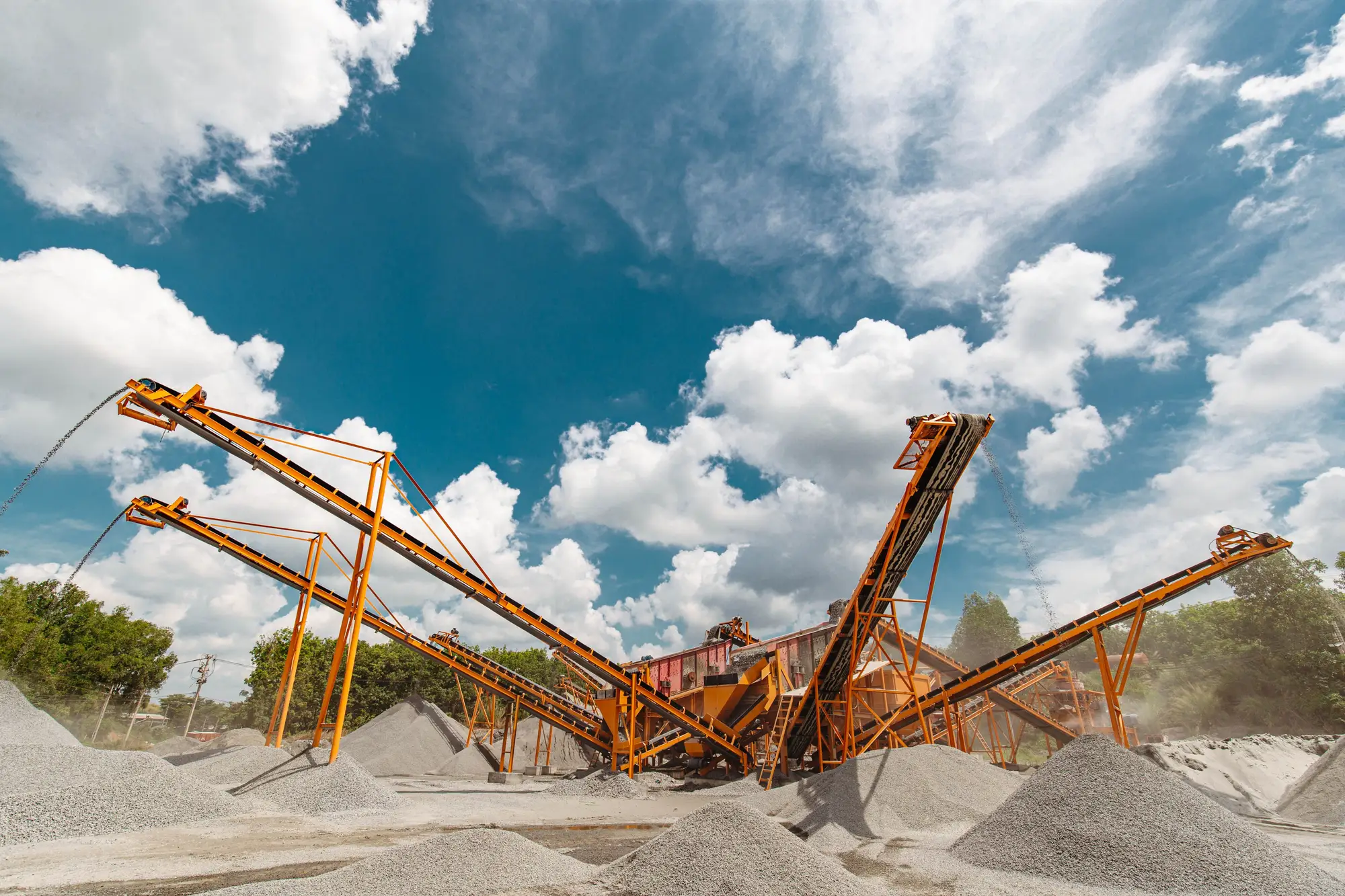
When a plant footprint changes between passes, the raw signal looks the same at first glance: a new rectangular shadow where there wasn't one before, a shift in the clutter around the processing area. But a new crusher installation and a conveyor realignment are two very different demand events, and an OEM analyst who flags the wrong one is sending a regional sales team to chase a capital replacement lead on a site that just moved a stacking conveyor forty feet to clear a haul road.
The confusion is understandable. Both show up as "something built where nothing was." The fix is knowing what each one looks like on the ground, because the two leave different footprints, different shadow geometry, and different relationships to the rest of the plant.
What a crusher install looks like from above
A crusher sits on a poured concrete foundation, and that foundation shows up in imagery before the machine does. Look for a hard-edged rectangle or pad, lighter in tone than the surrounding graded surface, that wasn't present in the prior quarterly pass. It's usually accompanied by a compaction halo, a ring of disturbed ground from grading and equipment staging, and often a new or widened access spur running to it for crane and delivery trucks.
Once the unit is set, the housing itself casts a distinct shadow, taller and more angular than a stockpile, and it tends to sit at a fixed point in the material flow, typically between the primary extraction face and the screening plant. If you see a new structure anchored at that position in the process chain, with a feeder apron or hopper lip visible at one end, that's a crusher, not a conveyor.
Timing matters too. A crusher install runs through a sequence over several quarters: cleared pad, poured foundation, staged components, assembled unit, then the stockpile pattern around it starts shifting once the unit is running. A conveyor move happens faster and skips most of that sequence entirely.
What a conveyor realignment looks like
Conveyors read as long, thin, linear features, often elevated on a gantry that casts a narrow, continuous shadow line. A realignment shows up as the old line going quiet (vegetation starting to fill the former corridor, or the gravel track staying put but no longer carrying the wear pattern of regular dust fall) while a new line appears at an angle nearby.
The part to watch is the pivot. A realigned conveyor is almost always anchored at one end to something fixed, a transfer tower, a hopper, a crusher discharge, and it swings around that point toward a new stacking location or loadout. Check what stayed put at one end. If the fixed end is the same structure in both passes and only the far end moved, you're looking at a reroute, not new capital equipment. It's a layout adjustment, usually driven by a stockpile running out of room or a haul road getting rerouted around it, not a replacement cycle.
Conveyor moves also don't bring the staging clutter a crusher install does. No laydown yard, no crane pad, no sequence of foundation work across quarters. One pass it's in the old position, the next pass it's in the new one, done.
Reading the two passes together
The real tell comes from putting two dated passes of the same pit side by side rather than eyeballing a single frame. A crusher install accumulates: pad, then staging, then structure, then stockpile pattern change around it, stretched across more than one quarterly cycle. A conveyor realignment resolves in a single step between two passes, old line cold, new line active, same anchor point at one end.
If you're scanning a whole region's pits to separate new crusher pads going in from conveyors getting rerouted around haul roads or stockpiles, that side-by-side comparison is the whole method. A single frame shows a new shape in the yard, but it can't say whether that shape is a foundation pad or a relocated gantry. Two dated passes of the same pit show which one it is, and whether it's worth a call to the account.
That distinction is what Quarry Equipment Census is built to surface on a standing, quarterly basis across a region's pits.