Double-deck vs. triple-deck screens: reading deck count from overhead imagery
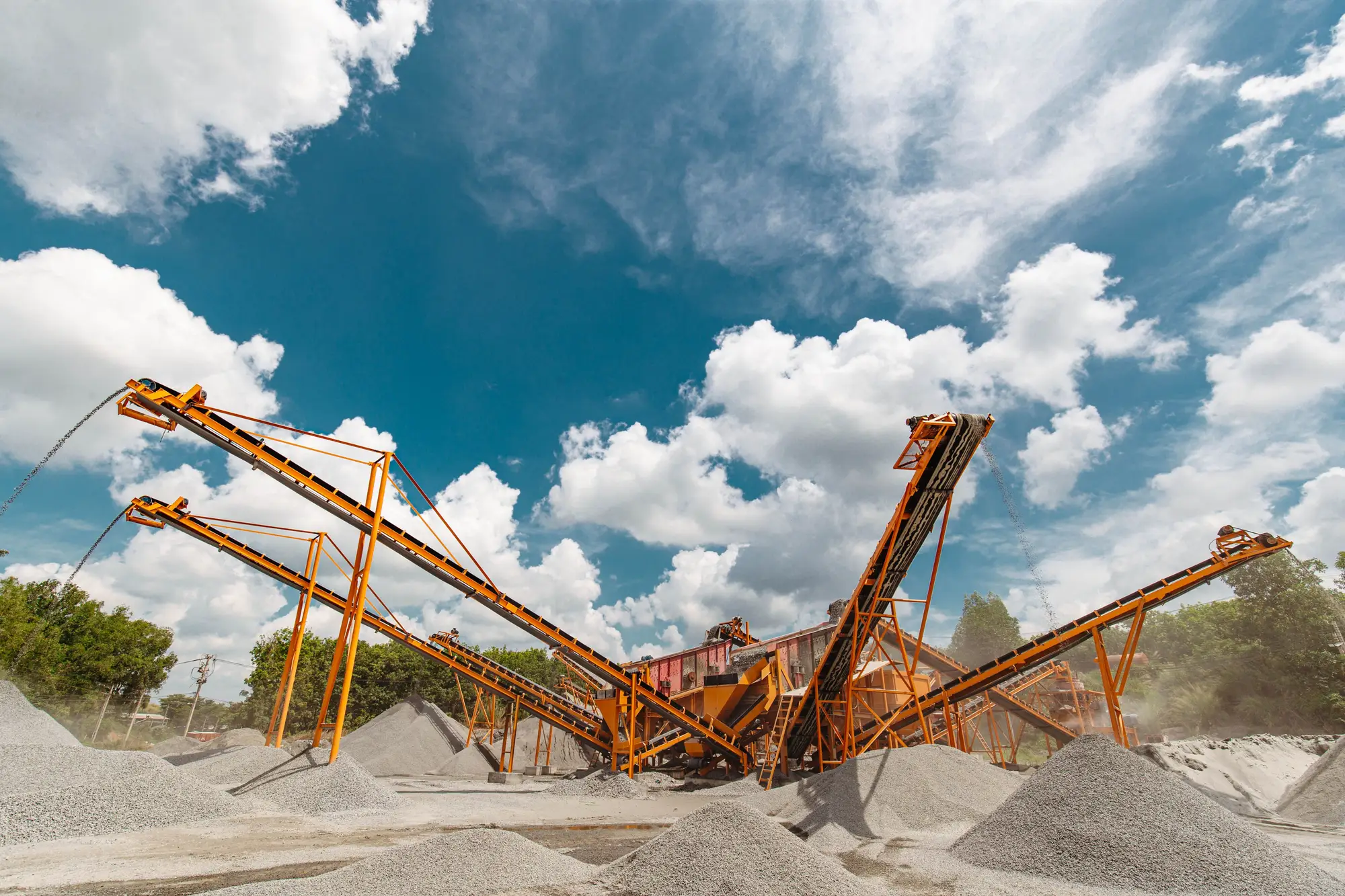
A vibrating screen's deck count sits inside a sealed box. From the ground you can count decks by climbing the stairs and looking through the inspection door. From a satellite pass or an aerial orthophoto at 0.5 m GSD, you're looking at a roof, a feed chute, and whatever the screen is dropping onto the ground below. That's the whole problem in one sentence, and it's worth being honest about before anyone builds a workflow around it.
Deck count matters to an OEM analyst because it's a rough proxy for throughput and product split. A double-deck screen splits feed into oversize, mids, and fines. A triple-deck screen adds a cut, usually to pull a tighter mid-size product for asphalt or concrete spec work. Operators replace a double-deck with a triple when the pit's product mix shifts toward tighter gradation demand, and that replacement cycle is exactly the kind of signal a regional demand model wants to catch early.
What you can actually read from the imagery
You won't see the decks. You'll see three things that correlate with deck count, loosely:
Stockpile count below the screen. A double-deck unit typically feeds two to three distinct product streams: oversize, one mid cut, and fines. A triple-deck adds a stream, so you're often looking at four stockpiles fanned out from the discharge end instead of three. Count the piles, not the screen.
Screen box footprint. Triple-deck screens run longer and sit on taller support steel to clear the extra discharge chute geometry. If you're comparing two screens of similar width in the same imagery set and one box reads noticeably longer and sits higher off grade, that's consistent with a third deck, not proof of one.
Discharge conveyor count. Count the belts running off the screen's underside toward stockpiles or a wash plant. More belts, more product streams, more likely a third deck is in play. A screen feeding straight back into a crusher circuit for scalping duty won't show this pattern at all, regardless of deck count, because the undersize goes back into the circuit rather than onto the ground.
None of these are a deck count. They're correlations an analyst who's walked enough plants learns to read, and they break the moment a site combines fines and mids onto one pile to save stacker moves, or runs a radial stacker that mixes two product streams into a single long pile. A two-pile yard can hide a triple-deck screen. A four-pile yard can be two screens, not one, stacking into adjacent cones.
Why capacity doesn't follow deck count anyway
Even with a confirmed deck count, capacity is set by screen width and length, panel or wire-cloth aperture, incline angle, stroke, and operating speed, none of which show up reliably in a single still frame. A 6x20 triple-deck running worn panels at low stroke can move less material than a well-maintained 6x16 double-deck. Treating deck count as a capacity figure from imagery alone overstates what the pixels can tell you, and an analyst sizing replacement demand across a region needs to know where that confidence drops off before building a model on top of it.
What the imagery is reliable for
Where overhead imagery earns its keep is simpler than deck classification: is a screen standing on the pad this quarter that wasn't standing there last quarter, has a unit gone idle with no stockpile growth beneath it, and has the stockpile footprint grown or shrunk against the pit's extraction rate. That's a count-and-change read, and it's the one a quarterly pass can actually deliver without guessing at what's bolted inside the box. Quarry Equipment Census runs that pass against every pit in a region, logging crushers, screens, loaders, and haulers on the ground each quarter and flagging what moved, what's new, and what's sat idle against the extraction trend.
If sizing replacement demand means knowing which pits are due for a screen swap before the RFQ drops, a standing count across the region is worth more than a guess at deck count from one frame.