How many years between crusher installations at a typical quarry?
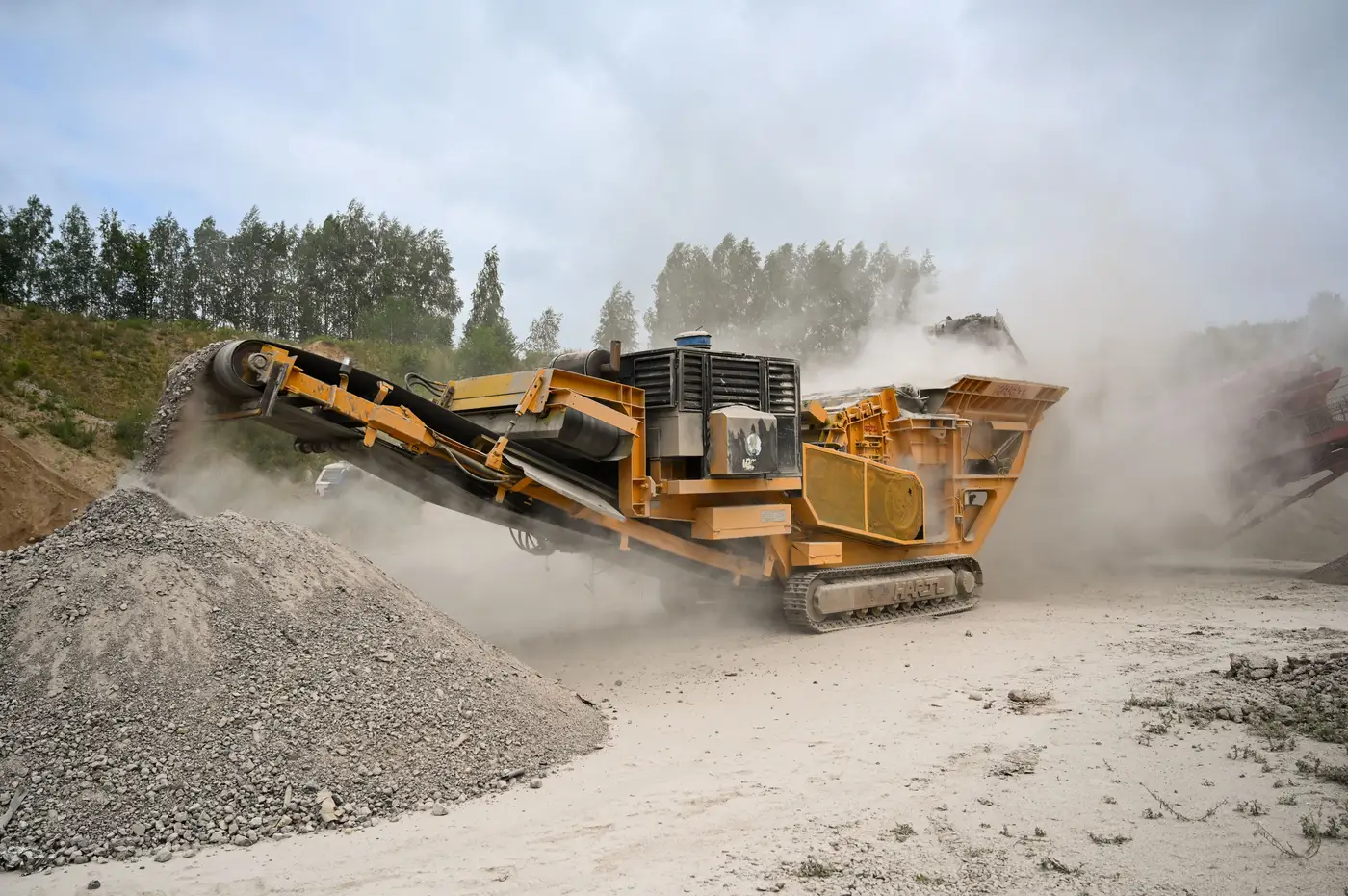
Ask five people in the industry this question and you'll get five different answers, because there isn't one number. A single-stage jaw crusher at a hard-rock quarry running two shifts can run fifteen to twenty-five years before an OEM sees a full replacement order rather than a parts order. A cone crusher on abrasive granite with tight maintenance might get swapped at twelve. A portable impactor doing seasonal sand-and-gravel work on softer stone can stretch past thirty if it's babied. The honest answer to "how many years between crusher installations" is: it depends on what's crushing what, how hard, and how well it's been kept.
That range is exactly why it's a hard number to forecast from a desk. It's also why it's the number that matters most to anyone sizing replacement demand across a region.
What drives the interval
A few things push the service life up or down more than anything else:
Material abrasiveness. Granite and basalt chew through liner steel and bearing surfaces faster than limestone or softer aggregate. A quarry running hard igneous rock is going to cycle crushers faster than one pulling limestone, full stop.
Duty cycle. A crusher run eight hours a day, five days a week ages differently than one run around the clock feeding a continuous asphalt or concrete plant. Hours on the machine matter more than calendar years, but calendar years are what an outside observer can track.
Maintenance discipline. A well-run shop that rebuilds, reliners, and rebushes on schedule gets more years out of the same iron than one that runs equipment to failure. This is the variable that makes "average service life" a genuinely fuzzy figure rather than a published spec. No manufacturer puts a number on it, because how long a crusher lasts comes down to how the shop runs it, not what's stamped on the nameplate.
Permit and reserve timing. A pit nearing the end of its reserve isn't going to drop capital into a new crusher train regardless of how old the current one is. A pit that just got a permit extension or opened a new bench is a different story entirely.
Primary, secondary, and tertiary don't age the same
The replacement rhythm also differs by stage. Primary crushers, the big jaws and gyratories taking raw blast rock, tend to be the longest-lived piece of iron on the pad because they're oversized relative to the duty and because swapping one is a major civil project, not a weekend job. Secondary cone crushers see more wear-part turnover and get rebuilt or replaced on a shorter cycle. Tertiary and quaternary stages, especially VSIs shaping manufactured sand, run hotter duty cycles and tend to turn over fastest of the three.
The "crusher replacement cycle" is really three or four overlapping intervals, each running on its own clock, at every site in the region at once.
Why this is the wrong question to answer from an office
Here's the practical problem. None of the factors above show up in a permit filing, a production report, or a press release. A quarry doesn't announce when it swaps a cone crusher. The only way to know is to look at the pad.
That's the gap a desk-based market model can't close. Nobody is going to call around to every pit in a region and ask when their crushers went in, and even if they did, the operator has no obligation to answer accurately. What's observable is simpler: is there a new crusher footprint on the pad that wasn't there last quarter? Did one disappear? Did the stockpile pattern around it change in a way that suggests a bigger or smaller unit went in?
Tracking that kind of change, pit by pit, across a region, on a repeatable schedule, turns a fuzzy industry rule of thumb into an actual count of what's turning over and where. That's the approach behind Quarry Equipment Census: a standing, dated record of what's sitting on each pad, pass over pass, so the replacement interval for a given region stops being a guess and starts being a line you can watch move.
If you're trying to size replacement demand for a territory rather than guess at it, that's worth a look.