Apron feeder vs. vibrating grizzly feeder: telling them apart from overhead
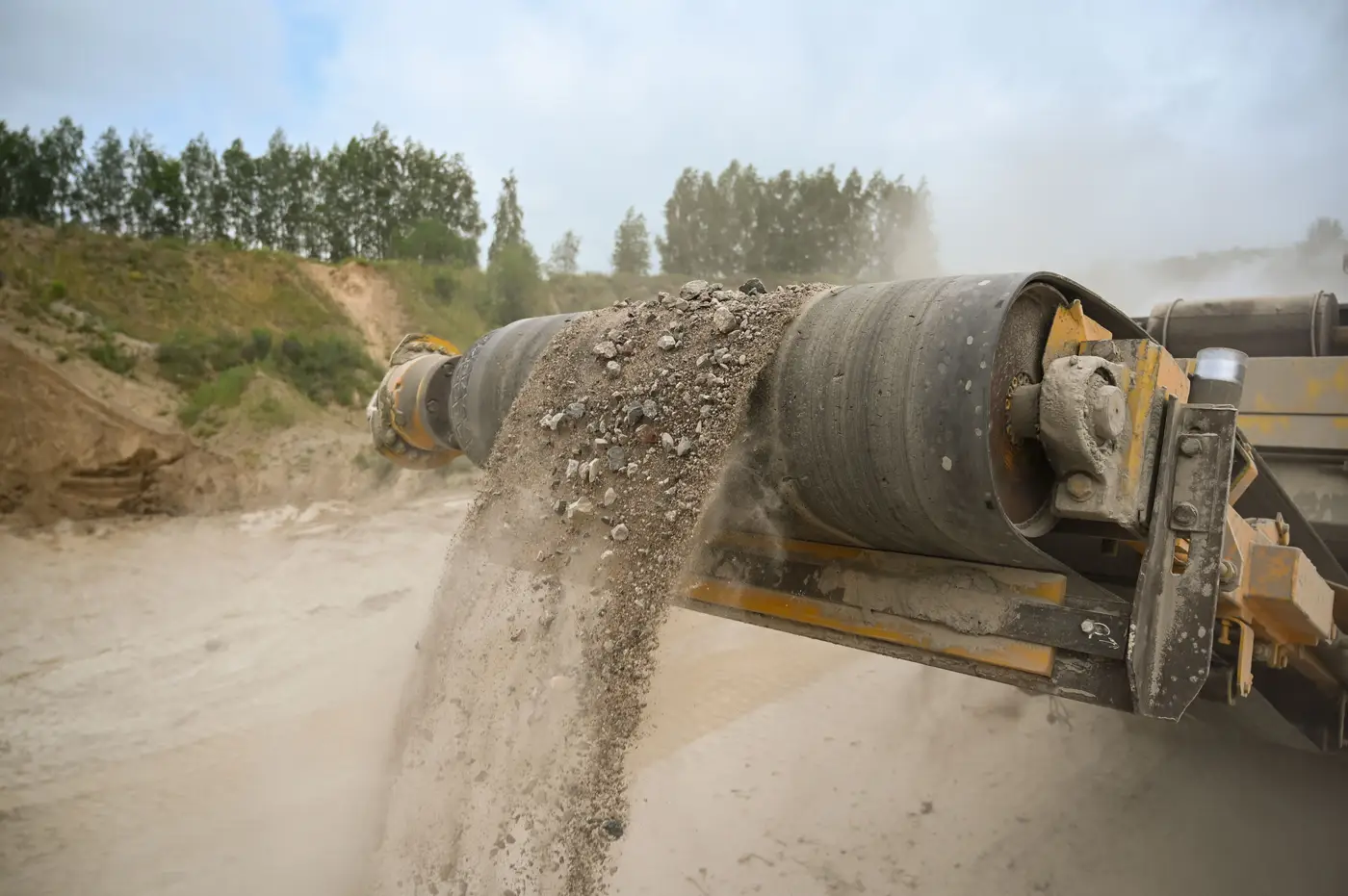
Primary crusher feed equipment is one of the easier categories to misread from above if you haven't spent time standing next to one. An apron feeder and a vibrating grizzly feeder do the same basic job, pulling run-of-mine rock out of a hopper at a controlled rate, but they sit in the plant differently and that shows up in overhead imagery once you know what to look for.
What each one actually does
An apron feeder is a heavy chain-and-pan conveyor, usually set at a shallow incline, carrying overlapping steel pans under a ROM hopper. It's built for high-tonnage, abrasive, large-block feed, think hard rock quarries and metal mines where you're dropping four-foot boulders out of a haul truck bed. The pans are visible as a ribbed texture if the unit isn't fully housed, and the structure runs long, often 20 to 40 feet, because the feed rate is controlled by belt speed rather than geometry.
A vibrating grizzly feeder is a shorter, boxier unit. Instead of moving material on a conveyor, it shakes a deck of spaced steel bars (the grizzly) so fines and near-size material drop through the gaps before the oversize ever reaches the crusher. That means a grizzly feeder is doing two jobs at once: feeding the crusher and scalping out material that doesn't need crushing at all. You'll see vibration isolation springs or rubber mounts at the base, and the whole assembly sits at a steeper angle than an apron feeder because it relies on shake, not travel distance, to move rock.
What gives it away in aerial and satellite imagery
At VHR resolution, the clearest tell is what happens downstream of the feeder, not the unit's shape on its own.
- One feed stream vs. two. An apron feeder delivers one continuous stream into the crusher. A vibrating grizzly feeder splits the load: undersize drops straight to a conveyor or stockpile below the deck, while oversize continues on to the crusher. Looking straight down, a grizzly installation often shows a visible fines pile or a short conveyor branching away from the main crusher feed line, something an apron feeder layout won't have.
- Footprint length. Apron feeders read long and linear, a narrow rectangle running from under the hopper to the crusher mouth. Grizzly feeders are short and squat by comparison, closer to a box than a conveyor.
- Housing and shadow pattern. Apron feeders are frequently enclosed in steel skirting to contain dust and spillage along their length, which can mask the pan detail but still shows as a continuous covered chute shape. Grizzly feeders are more often left semi-open over the bars themselves, even when the hopper above is covered, because the whole point is letting fines fall through.
- Position relative to the primary crusher. Apron feeders are the standard choice ahead of gyratory and large jaw crushers at high-tonnage hard-rock sites. Grizzly feeders show up more often ahead of smaller jaws and impact crushers, and in sand-and-gravel or softer limestone operations where scalping fines before the crusher saves wear on the chamber.
None of these are absolute. A tightly cropped or hazy pass can leave you guessing on a single frame, which is part of why a one-off satellite image of a plant tells you less than you'd think. Feeder identification holds up a lot better when you're looking at the same pit on a repeat schedule and can watch whether a feed structure gets rebuilt, re-routed, or sits untouched.
Why the distinction matters for sizing demand
Apron feeders and grizzly feeders wear differently, get replaced on different cycles, and signal different things about a plant's production profile. A site running apron feeders into a gyratory is usually a long-life, high-capex operation; a grizzly feeder ahead of a portable jaw often points to a smaller or more mobile crushing spread. Knowing which one you're counting changes how you read the rest of the plant.
A quarterly stand of crushers, screens, loaders and haulers across a region's pits carries that plant-level detail forward, so a feeder swap or a new crusher install shows up as a change between passes instead of a guess from a single image. If you're sizing replacement demand on feeders and crushers across a region's pits, see how two dated passes line up side by side.